
Ring-fenced consumer portal and defensively isolated workspace
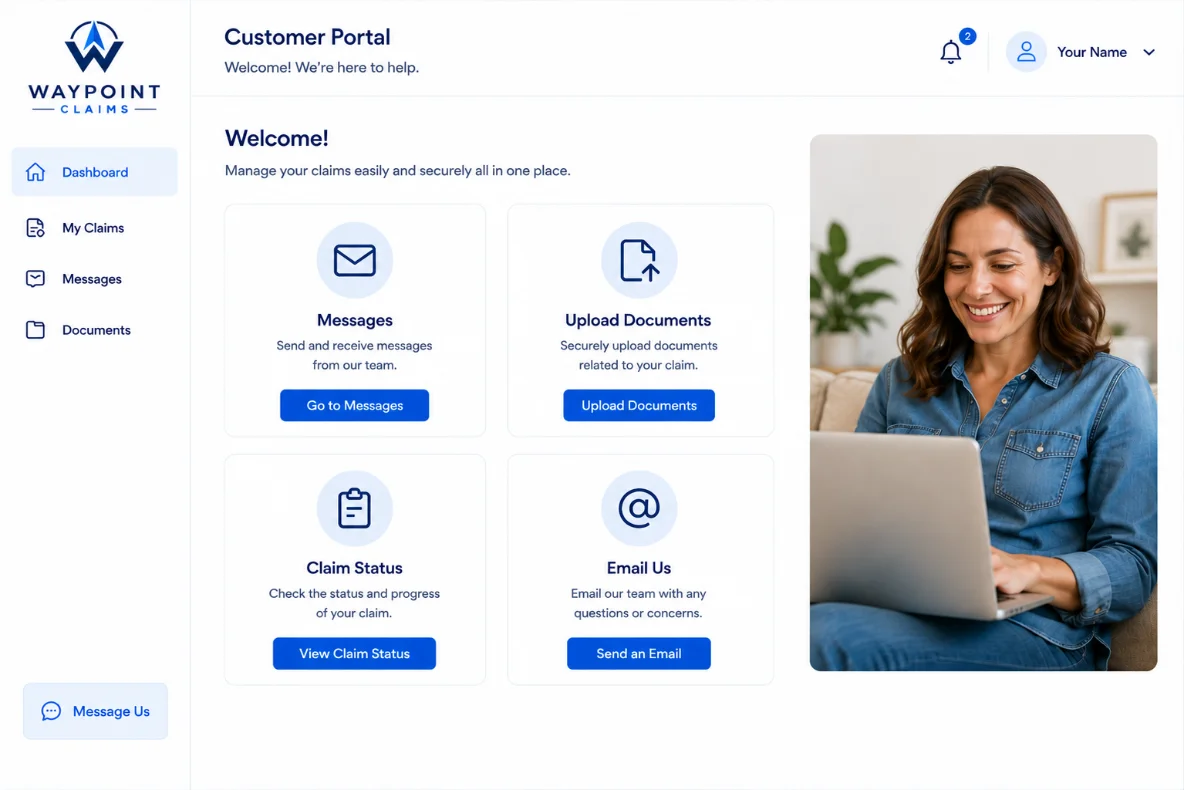
Claimants, insureds and other parties on one claim — contractors, attorneys and other contacts listed on it — check status, send photos, video and documents, and message the claim team, in seven languages.
No account and no password: a one-time link emailed to the address on the claim, good for 30 minutes and once, or the claim number plus the email or phone on file. There is no policy view and no premium or card payment — premium is never paid through Waypoint.
Claim-scoped Customer Visibility
A customer portal that shows too much creates disclosure problems; one that shows too little generates phone calls. This one answers the three questions that drive almost every status call.
A Customer Session Is Not A Staff Session
Every boundary below is structural rather than configured. A claimant session reaches one claim only and cannot open any staff screen, and staff sign-ins cannot open portal screens.
The page receives only the claim number, loss type, dates, milestone and adjuster’s name. Reserves, payments, notes, other parties and contact details are never sent to it.
A customer is not a user of your organization.
Everywhere else in Waypoint, access is entitlement first and role second. This portal is the exception worth stating plainly: a customer holds no role, has no standing account, and reaches exactly one claim for as long as they need it.
A customer is treated exclusively as an external guest, ensuring they possess zero systemic overlap with your internal personnel, corporate directories, or network structures. Customers do not exist within your internal employee directory, identity provider, or access control matrices.
Overcoming customer experience and support inefficiencies
Interconnected ecosystem touchpoints
This customer-facing interface securely exchanges real-time data with your internal operational core.
Quantifiable operational impact: count your status calls first
Calculate the immediate return on investment for your customer experience. Take a look at your current inbound call volumes. The vast majority of those manual touches are simple, repetitive inquiries about receipt confirmations and claim status updates. By introducing a ring-fenced, single-claim portal, you can shift those inquiries to touchless self-service immediately — allowing your adjusting teams to focus entirely on resolution rather than phone support.